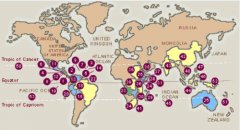
“Countries in the world” search results (6000)

What is the European Fine Coffee Association? Basic knowledge of coffee
The European Fine Coffee Association (SCAE) is a fast-growing coffee association that brings together people looking for coffee excellence (coffee excellence). If you belong to SCAE, you don't have to be European. We have members from 70 different countries around the world who share the latest developments and information on boutique coffee in SCAE. We have set up national branches in these countries to
2015-10-12 What Europe boutique coffee associations basics common sense
SCAE European boutique coffee association explains the fundamentals of baristas
Business card editor European boutique coffee association logo SCAE (full name Specialty Coffee Association of Europe), translated into Chinese as European boutique coffee association, also translated as European specialty coffee association. Founded in London in 1998, it now has more than 3000 members in more than 70 countries and has established SCAE chapters in 35 countries.
2015-11-27 SCAE Europe boutique coffee will explain
Fine Coffee General knowledge International Coffee Organization History
In the 19th century, coffee became an important commodity in the international trade market. For a long time after that, the coffee market was often in a state of oversupply, low prices, and occasional price increases in short supply, but for a short period of time. During the economic crisis of the 1930s and World War II (1939-1945), the coffee market
2014-11-27 Boutique coffee common sense international organization history 19th century
Introduction to the characteristics of coffee price and flavor in which countries in Central America produce coffee
The most sensible and practical way to understand coffee-producing countries is to classify them into the world's three major coffee growing regions: Africa, Indonesia and Central and South America. Generally speaking, coffee grown in the vicinity has similar characteristics. If a particular bean is out of stock, the manufacturer and buyer of the comprehensive product will usually look for a nearby country. People who make comprehensive products will say: I think
2016-10-17 Central America coffee beans which countries production coffee price flavor characteristics water
Coffee anecdotes which countries does the country of a thousand cups refer to?
The Nordic countries always give people a very mysterious color, with beautiful myths and legends, as well as European chivalry culture and aristocratic temperament. The four Nordic countries refer to Denmark, Finland, Norway and Sweden. In recent years, the average coffee consumption of the people of the four Nordic countries has been among the top four in the world (more than 1,000 cups per person per year). They love coffee and sing with Bach.
2014-09-04 Coffee culture the country of a thousand cups coffee anecdotes drinking a thousand cups
Fine coffee culture common sense coffee customs of all countries in the world
The coffee customs of Northern Europe and Europe are expressed as brewed coffee without sediment, light and round; coffee beans are roasted to brown; the way of brewing is drip-type or machine-type, and all kinds of fancy coffees changed by Espresso-cappuccino, Viennese coffee, French milk coffee, etc. Coffee customs in the Middle East are characterized by an obsession with basic drinking patterns, and people associate coffee with coffee.
2015-01-13 Boutique Coffee Culture Common Sense Countries Coffee Customs Nordic European Continental
What are the different coffee drinking habits in different countries around the world?
South India People in South India are keen on coffee with lots of milk and sugar because drinking it helps to relieve the taste irritation after eating spicy food. Sudanese people used to pour black coffee into coffee pots and add cloves and other spices. Turkey Because Turkish coffee is brewed with coffee powder, coffee will contain a lot of coffee powder, so it is in the product.
2016-10-18 world different countries have what coffee habits India people passion
The International Coffee Organization improves the situation of the world coffee industry through international cooperation.
The International Coffee Organization is an intergovernmental organization founded in London in 1963. It is composed of coffee importers and exporters. The organization is responsible for implementing the International Coffee Convention and is committed to improving the situation of the world coffee industry through international cooperation. The establishment of the International Coffee Organization is based on the irreplaceable economic importance of coffee. Coffee is one of the most traded goods in the world.
2015-04-27 International coffee organization adoption international cooperation improvement world industry situation
What are the similar characteristics of coffee produced in different countries?
The most sensible and practical way to understand coffee-producing countries is to classify them into the world's three major coffee growing regions: Africa, Indonesia and Central and South America. Generally speaking, coffee grown in the vicinity has similar characteristics. If a particular bean is out of stock, the manufacturer and buyer of the comprehensive product will usually look for a nearby country. People who make comprehensive products will say: I think
2016-05-24 Production coffee some countries different all have what like characteristics
Coffee beans in coffee-producing areas distinguish between the countries that produce coffee
The most sensible and practical way to understand coffee-producing countries is to classify them into the world's three major coffee growing regions: Africa, Indonesia and Central and South America. Generally speaking, coffee grown in the vicinity has similar characteristics. If a particular bean is out of stock, the manufacturer and buyer of the comprehensive product will usually look for a nearby country. People who make comprehensive products will say: I think
2016-05-04 Coffee producing areas coffee beans distinction understanding production country
Coffee culture of countries all over the world
Beginning with Penicia in 1615, coffee culture was spread throughout Europe. That strength, of course, set off friction everywhere. It also caused Islamic drinks to be brought to Christians in Rome, and there are two arguments about whether they agree or not. King Clement VIII of France at that time, although it was the devil's drink, it was so delicious. It's a pity to let this drink go to the pagan tea station. "because
2015-11-09 Countries all over the world coffee culture
The Coffee Culture of countries around the World
Beginning with Penicia in 1615, coffee culture was spread throughout Europe. That strength, of course, set off friction everywhere. It also caused Islamic drinks to be brought to Christians in Rome, and there are two arguments about whether they agree or not. King Clement VIII of France at that time, although it was the devil's drink, it was so delicious. It's a pity to let this drink go to the pagan tea station. "because
2015-03-18 Countries all over the world coffee culture boutique
The brand of Chris instant coffee.
Chris Coffee, born in Germany in 1963, is the earliest vacuum bag system in the world to be developed into instant coffee, and has been well received in Europe, the Soviet Union and other countries. In 1963, the world's earliest vacuum packaging method was made into instant coffee, which was taken for granted in Germany and widely loved in European countries. The trademark is used in Russia and Eastern Europe after the collapse of the Berlin Wall.
2016-05-17 Clay taxi speed coffee brand instant clay 1963
14-3 African producers introduced by the world coffee producers
African producing countries 1. Ethiopia Ethiopia Ethiopian coffee is neither strong nor irritating. It is produced in Harald (Harrar), Yega Xuefei (Yirgacheffe), Sidamo (Sidamo), Limu (Limu), Djimmah (Djimmah), Lekempti (Kepa), Kapa and other places. Among them, Harald coffee is the substitute of Ethiopian coffee.
2014-08-29 World coffee producing countries African producing countries
Brief introduction of German Brand Coffee Klass Coffee
Chris Coffee, born in Germany in 1963, is the earliest vacuum bag system in the world to be developed into instant coffee, and has been well received in Europe, the Soviet Union and other countries. In 1963, the world's earliest vacuum packaging method was made into instant coffee, and it was taken for granted that it was popular in Germany, and it was also a popular trademark in European countries, especially in Russia and Eastern Europe after the collapse of the Berlin Wall.
2015-03-09 Germany Brand Coffee Clay profile born in 1963
Introduction of Klass Coffee International Coffee Brand
Chris Coffee, born in Germany in 1963, is the earliest vacuum bag system in the world to be developed into instant coffee, and has been well received in Europe, the Soviet Union and other countries. In 1963, the world's earliest vacuum packaging method was made into instant coffee, and it was taken for granted that it was popular in Germany, and it was also a popular trademark in European countries, especially in Russia and Eastern Europe after the collapse of the Berlin Wall.
2015-08-05 Clay Coffee International Brand introduction born in 1963

Coffee producing areas in Colombia introduce coffee producing countries
Colombian coffee beans are large in shape, light green, with a special thick flavor, and are widely favored for their rich and unique aroma. The taste is sweet in the acid and low in bitterness, which can lead to multi-level flavor with the different degree of baking. Moderate baking can give full play to the sweetness of beans, with mellow acidity and bitterness; deep baking increases bitterness, but the sweetness is still not.
2016-06-16 Colombia coffee production area introduction producing country coffee beans bean shape
Introduction to the main economies of the coffee-producing countries of Venezuela
Venezuela's main economic source industry is relatively developed, focusing on the development of iron and steel, petrochemical, aluminum smelting and other industries since the 1970s. Agricultural arable land accounts for only 7.1% of the arable land area, mainly producing corn, rice, coffee, cocoa, sugar cane, cotton and so on. Animal husbandry is mainly cattle raising, and agricultural and animal husbandry products are not self-sufficient. Crude oil and its products account for more than 90% of the total export value, followed by iron
2016-06-27 Coffee producing country Venezuela main economy introduction